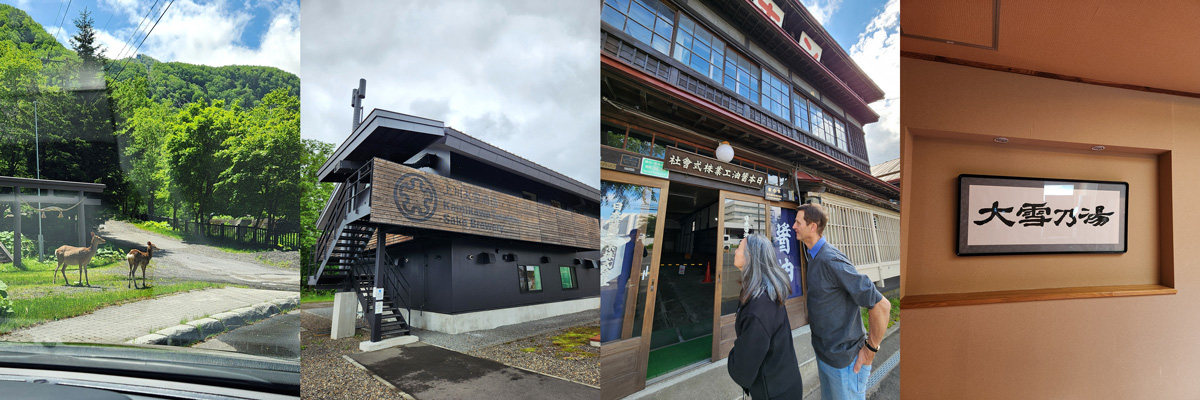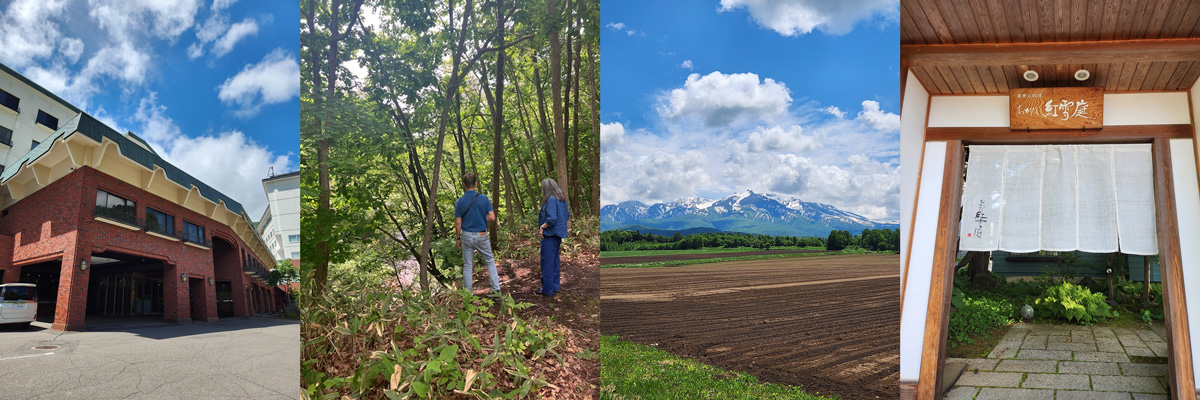
Driving from Asahikawa toward Sounkyo, I found my mind drifting to the many mountain ranges I have known over the years. In Europe, I have spent time in the Alps, the Pyrenees, and the Jura; in southern Africa, in the Drakensberg. Of these, it was the European ranges that felt closest in spirit to Sounkyo.
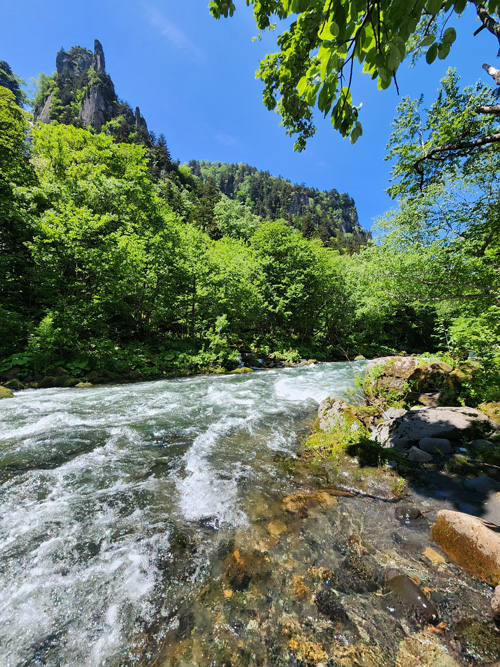
What captivated me most was the volcanic landscape. The columnar joinery — those striking geometric formations carved from ancient lava — was unlike anything I had seen before.
We visited in June. The world around us was wrapped in vivid green; the sky was a clear, deep blue; and towering cumulonimbus clouds in the distance created a dramatic contrast that I found breathtaking.
#15
A Journey with One Resolve: To Return to Taisetsuzan
Charles Arden-Clarke
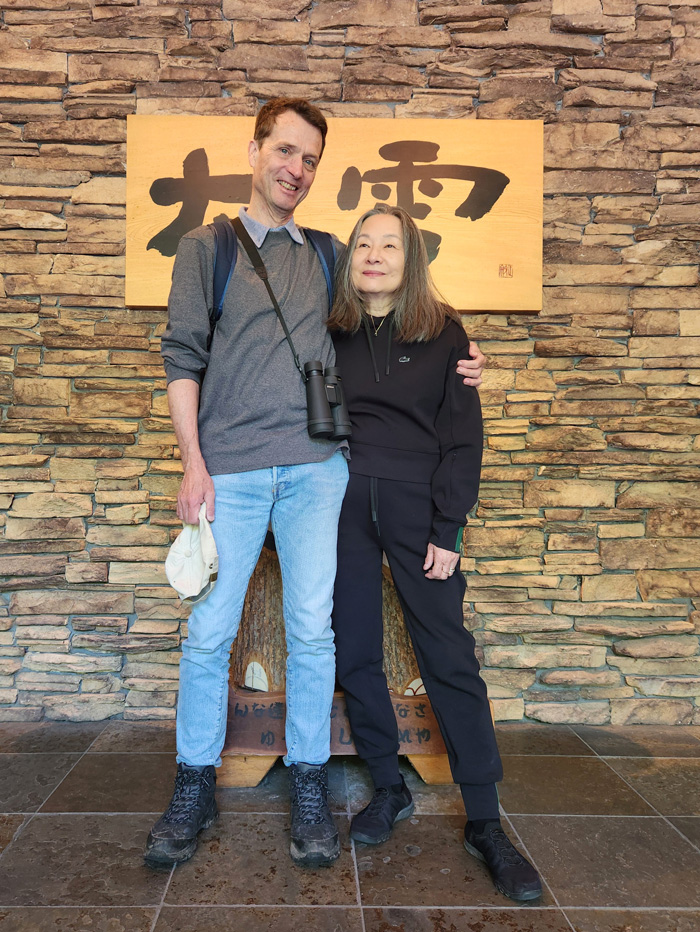
My wife and I had only recently returned to England after more than thirty years in Switzerland and France. That, perhaps, is why the mountains of Sounkyo stirred something deep within us. England has beautiful hills and forests, of course, but nothing that could truly be called mountains.
Hotel Taisetsu proved an excellent base for exploring the surrounding area and Taisetsuzan National Park. The hotel itself is embraced by nature, and just steps away lies a trail winding alongside a vigorous river that tumbles down toward Sounkyo. Having spent years working as a zoologist in Africa and later with the United Nations Environment Programme, I found this immersion in the natural world deeply rewarding.
The hotel has three wonderful onsen, and I made the most of them — beginning with the top-floor bath and sauna, then moving to the outdoor bath, where I soaked while gazing up at the mountains and listening to the calls of birds. Following the advice of a knowledgeable friend, I repeated this sequence three times to get the full benefit.
Dinner was a lively affair shared with friends who had joined us. The buffet was exceptional — a generous spread of freshly prepared dishes representing a wide range. I am particularly fond of seafood and Japanese cuisine, and the self-serve draught beer added yet another layer of pleasure to an already memorable meal. The following morning's breakfast buffet was equally impressive, offering more than enough variety to fuel us for a walk through Momijidani Valley.
Pristine nature, comfortable accommodation, and outstanding food — finding all three together in one place is a rare thing, even for a well-travelled person.
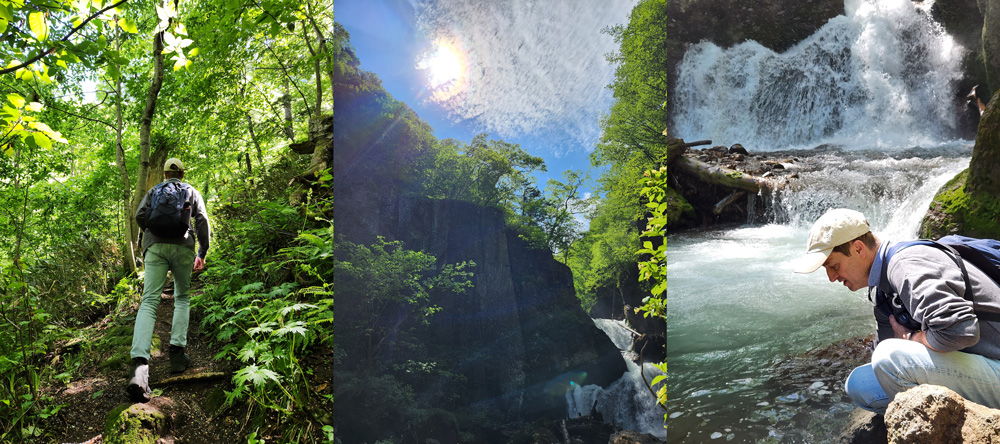
Exploring Momijidani Valley to the sound of rushing water and birdsong.
Birdwatching is a passion of mine, and one of the main reasons for this journey. I was genuinely thrilled to encounter many raptors and several species of woodpecker — birds I had never seen before. At the same time, I felt a strong pull to return to Hokkaido in a different season, for the one bird I most wanted to see — the Crested Kingfisher — had eluded me across both days.
For birdwatchers around the world, Hokkaido is a place of almost legendary appeal. I can say without hesitation that it lived up to every expectation.
#15
The Gentle Hours That Flow Through Taisetsuzan
Kazu Kaido
It was my husband's wish to go birdwatching and hiking that brought me to Hokkaido for the first time. We flew from Tokyo to Asahikawa, then made our way to Sounkyo. I had known of Taisetsuzan National Park since childhood — the characters of its name, meaning "great snowy mountain," had always suggested something formidable and masculine, a place to approach with a degree of awe. But the moment I arrived, I found it entirely otherwise. The rivers, the waterfalls, the mountains — all had a gentle, welcoming quality, and I sensed that the animals, fish, and birds who make their home here do so with ease and contentment.
In the morning, I drew back the curtains to find a deer standing just outside the window, gazing steadily at me from the valley. In that moment, I felt I understood why in this land the deer, the bear, and the birds are regarded as messengers of the divine.
The onsen and sauna were among the pleasures I had most looked forward to on this trip, and Hotel Taisetsu did not disappoint — there were three separate baths to enjoy. Before dinner in the evening, I took my time, moving between the indoor bath, the sauna, and finally the outdoor bath, where I let my gaze drift over the hotel garden and the forest beyond. I thought to myself: this is what true luxury feels like. This is one of the quiet joys at the heart of Japanese life. Looking at the other women around me, each one savouring the moment in her own peaceful way, I felt certain we had chosen a very fine hotel.
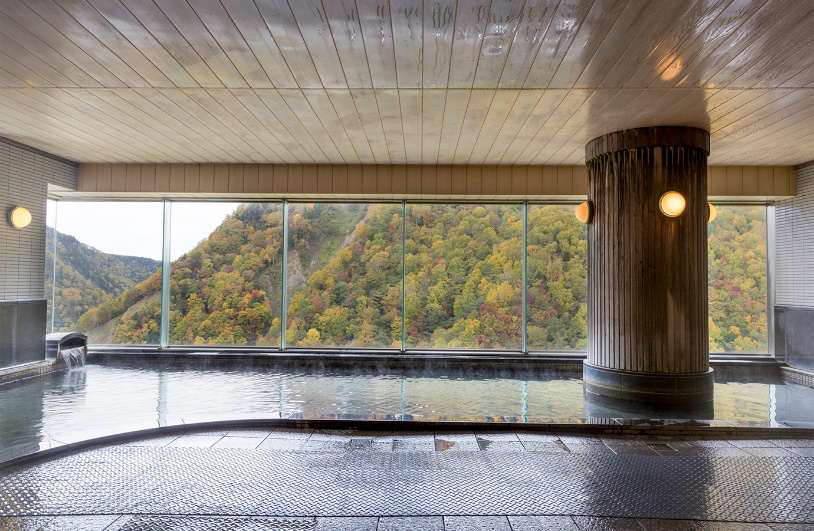
*Photo courtesy of Hotel Taisetsu website
Both dinner and breakfast were at the hotel buffet, and we enjoyed them together with two friends who had joined us for the trip – quite simply wonderful. Not only was everything delicious, but there were fascinating dishes we had never tried before — Ainu cuisine, among others. When you are visiting Japan for a short time from abroad, you want to taste as much as possible, and a buffet is the perfect answer. Everything was served at precisely the right temperature, the ingredients were of the finest quality, and the flavours were impeccable. I found myself wishing we were staying for many more nights. The wines and other drinks were equally excellent.
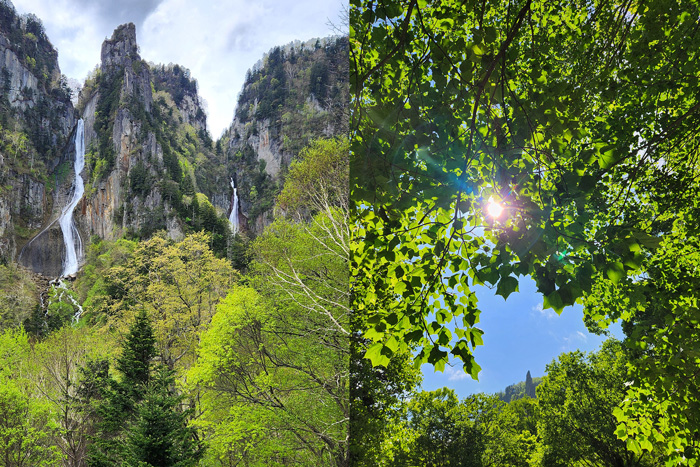
The following morning, after another splendid breakfast, we went to see the Ginga and Ryusei Falls. I thought what beautiful, almost modern names they were, and was astonished to learn that they had been given those names back in 1923. To stand before waterfalls that have been called "the Milky Way" and "the Meteor" for over a hundred years — and to discover that together they are also known as the Husband-and-Wife Falls — and to be standing there with my own husband, having come all the way from England, filled me with a quiet sense of gratitude.
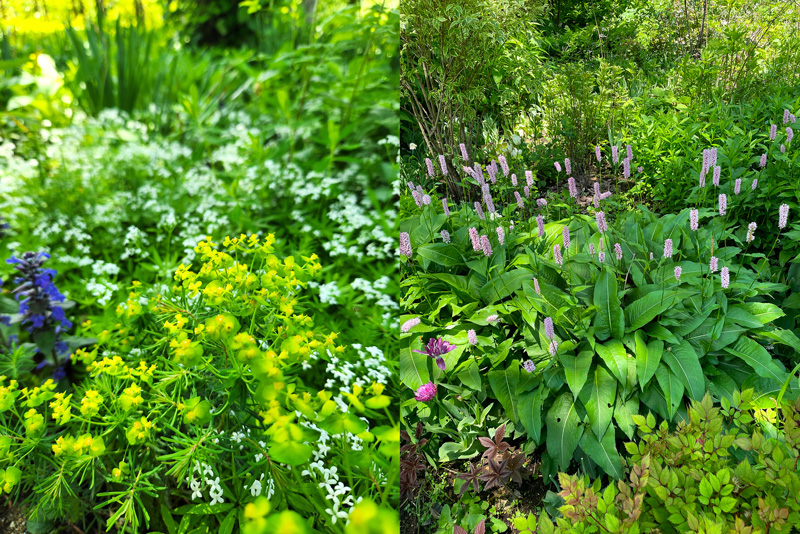
Afterwards, we visited Taisetsu Mori no Garden. Some of the plants and flowers were entirely new to me, yet the overall design felt strikingly reminiscent of an English garden — and I was delighted to find many of the same flowers that grow in my own garden at home. The way the beautifully laid-out formal borders give way, almost imperceptibly, to a woodland walk is a masterpiece of garden design. It is a place that calls you back with every season.
June is said to be less than ideal for birdwatching, as the trees are in full leaf, but it is the summer breeding season, and birdsong fills the air. My husband, an Englishman encountering many species for the first time, was absorbed in matching calls to names and tracking down birds that remained hidden somewhere in the green canopy overhead. He seemed thoroughly content. As for me, listening to a bird singing beautifully from somewhere unseen, I thought: we didn't meet this time, but next time, surely. I left Taisetsuzan feeling quietly grateful that Sounkyo exists in this world, and deeply, peacefully satisfied.